I became a member of Mosaic House in November 2019. At that point my confidence was very low, and I was feeling very isolated, spending too much time at home on my own.
Mosaic helped me get of the house and structure my days. The centre had a relaxed feel, and I found the people and staff very welcoming. I loved the way staff and members work together on things side by side. Even though I was still struggling with my mental health, I felt like I could just be myself which was invaluable to me.
At first, I went to Education & Employment meetings and did outreach work which involved phoning members to remind them of upcoming activities and events at the centre. I also supported members with their reading which made me feel like I was doing something worthwhile.
When the pandemic and the first lockdown came, my engagement worker was great at keeping in regular contact with me. This helped keep me sane while I was stuck at home, helping my son with online school for all those months.
My engagement worker also encouraged me to access a couple of online courses which I found very helpful. The first was on employment in childcare which helped me realise the skills I had to offer. The other course was mental health first aid which really allowed me to gain a good insight into potentially helping others with mental health issues.
In 2021, I found myself going to Mosaic a lot more regularly which really helped me get to know members and staff better and develop friendships. I really like the fact that I can now come into the centre where people know me and have meaningful conversations
As well as helping with work activities, there are a range of other activities you can attend such as such as the walking and writing group. I really enjoy the weekly yoga as I find it’s a good way to exercise and stay grounded.
More recently, I’ve helped with other projects such as organising complementary hairdos for some members at a local salon which they loved and assisting at the monthly wellbeing check in at the centre.
I’ve also become involved in volunteering for the Hospital peer support project funded by SLAM. This is where we go into local mental health wards and offer support to those in need. This has been quite therapeutic for me so far, as it was not that long ago that I was in the same situation, and I am now able to use that lived experience to help others. It feels good. I think it might be something I’d like to do as a job in the future.
Mosaic also provided me with a new laptop due to my involvement with the peer support project which I was so grateful for as my old one had literally conked out!
In short, Mosaic has helped me so much since I started. Whilst doing worthwhile activities and accumulating skills, I’ve grown in confidence, become more sociable and developed meaningful friendships. I can now see possibilities for the future.
My name is Chimere Sherald and I am a member of Gateway. A former athlete, I played basketball at Spartanburg Methodist College and Limestone College. I have three college degrees; an Associates in Art from Spartanburg Methodist College, a Bachelors in Studio Art with a concentration of Graphic design from Full Sail University, and a Masters in Media Design. I’ve worked as a high school women’s Basketball assistant coach and as a graphic designer for an indie music label where I designed album covers for music artists. I was always used to accomplishing something. Having goals and reaching every one of them. In September of 2005 my world became dark, confusing, and pointless in my eyes. Dealing with the death of a family member and a friend while having difficulty with employment, I was so far gone I didn’t realize I was depressed. I was hospitalized over twenty times. I lost my job and became homeless. All hope seemed lost. I was depressed and suicidal.
But then I discovered Gateway. And it changed everything. I’ve never experienced anything like Gateway. Gateway is uniquely different because at Gateway you are not treated as a number. You are seen as an individual, as a human being. You know you matter, and you are always wanted. There is no stigma at Gateway. There is caring and hope and dignity. At Gateway I am surrounded by unique, intelligent individuals, and our diagnoses doesn’t matter because our diagnosis doesn’t define who we are at Gateway.
It’s hard to describe Gateway adequately with words. Gateway is effective and transformative. Gateway helps members go back to school through education programs. Gateway also helps member with independent living and getting a job. Gateway removes barriers
The Clubhouse has given me purpose and a community. Through the Work-Ordered Day, Gateway has given me confidence to use my talents and has brought me out of my depressed shell. I have established amazing relationships with my Clubhouse family. We all encourage and push one another to grow, dream, and achieve. I think we give one another the love that we never received anywhere else. We all know what it’s like to be misunderstood because we deal with an invisible illness. Some people don’t have the tools to understand mental illness and what’s it like to deal with it. But I’m back to being social where I was isolated before. I am no longer homeless because Gateway has blessed me with my own apartment. I am also back in the workforce. I had the opportunity to return to work through a Gateway Transitional Employment job with Swamp Rabbit Café and Grocery as a dishwasher and I loved it!
Most of all, I now have hope and a reason to live. I also have some exciting news to share…now, through the help of Gateway, I am fulfilling my dreams of working in the graphic design field! This is my dream come true; getting to create, working with lots of different people and learning from different artists in my career field. And I have plans for my future…
So, if you know anyone suffering or fighting a mental illness, don’t shun them away. Listen to them and hear them out. Sometimes that’s all it takes is for someone to just listen. You can also tell them to learn about Gateway.
At our recent World Seminar, over 600 Clubhouse colleagues representing almost 170 Clubhouses from 14 countries and 32 US states gathered for five information-packed days with eight plenaries and 47 workshops, and networking opportunities.
Following the Seminar, we hosted a two-day Virtual Event for anyone not able to attend the in-person Seminar and who were interested in learning about Clubhouse and mental health care best practices, tips and strategies.
At the in-person Seminar, we were honored to be joined by many Clubhouse voices and mental health advocates from around the world, including: Keynote speaker, Dévora Kestel, World Health Organization; Baltimore, MD, USA Mayor, Brandon Scott; Melissa Harris, Centers for Medicare and Medicaid Services; and Clubhouse International’s leader, Robby Vorspan.
We were thrilled to welcome our keynote speaker, Dévora Kestel, Director of Mental Health and Substance Use, World Health Organization! Dévora Kestel has more than thirty years of international experience in Europe, the Caribbean and Latin America, implementing and advising governments on national policies related to mental health systems. She is a strong advocate for the rights of people with mental health issues. Since joining WHO in 2000, Dévora Kestel has worked at country, subregional and regional levels, in WHO and PAHO. In 2015, she became the Mental Health and Substance Use Unit Chief at PAHO. The different positions she occupied and challenges she faced, give her a privileged perspective to now undertake global responsibilities. Dévora is a great friend of Clubhouse International and supporter of the Clubhouse approach to recovery.
We were also pleased that Melissa Harris, Deputy Director for the Disabled and Elderly Health Programs Group, Centers for Medicare and Medicaid Services joined a roundtable discussion focused on how Medicaid funding works with Clubhouses. Melissa has previously worked with Clubhouse International, helping to better understand US Medicaid funding and bridge gaps for Clubhouses seeking Medicaid funding in their respective states.
The World Seminar incorporated an array of plenary sessions, workshops, roundtables, interactive forums, and other opportunities for innovative learning. This year’s topics included exploration of the fundamentals of Clubhouse practice and values and introduced cutting-edge advances in our global Clubhouse network, including:
How to hire, inspire, and keep great staff
Introducing: The Clubhouse Wellness Toolkit!
Becoming the ‘Best Known Solution’ instead of the ‘Best Kept Secret’
Members need homes – not just housing: upping the ante and raising our expectations
Activating and energizing our Clubhouse Coalitions: strategies for maximum success
Pushing the envelope: how can Clubhouses embrace even greater diversity, equity, inclusion?
Talking the talk: innovations in successful Clubhouse branding and marketing
Partners in your community: strategies for growing effective relationships in your town or city
Hybrid programming: ensuring it is actually helping Clubhouse members!
Clubhouse International is deeply honored to receive the Honorary 2022 Pardes Humanitarian Prize in Mental Health awarded by The Brain and Behavior Research Foundation. The Pardes Prize recognizes the Clubhouse Model of psychosocial rehabilitation as a rights-based approach to recovery that expands access to care for people living with mental illness around the world.
The Pardes Humanitarian Prize in Mental Health is awarded annually to recognize individuals and organizations whose contributions have made a profound and lasting impact in advancing the understanding of mental health and improving the lives of people who are living with mental illness. It focuses public attention on the burden mental illness places on individuals and society and the urgent need to expand mental health services globally. Established in 2014, the Pardes Prize is named in honor of Herbert Pardes, M.D., the internationally renowned psychiatrist, outspoken advocate for people living with mental illness, and the award’s first recipient.
Clubhouse International is honored to join StrongMinds, a social enterprise founded by Sean Mayberry that provides life-changing mental health services to women and adolescents in low-income communities in sub-Saharan Africa, as a recipient of the 2022 Honorary Pardes Prize, and Dr. Altha J. Stewart and Professor Robert van Voren, on being named recipients of the 2022 Pardes Humanitarian Prize in Mental Health.
“These talented and accomplished leaders are striving to expand the reach of mental illness treatment here in the U.S. and around the globe. They serve as extraordinary advocates for mental health and inspire us all to use our knowledge toward the greater good for all humanity,” said Jeffrey Borenstein, M.D., President & CEO of the Brain & Behavior Research Foundation.
For more than 25 years Clubhouse International has pioneered the recovery concept for people living with mental illness and put into practice the active participation of people themselves in their recovery process. Many people living with a mental health condition still lack access to quality services that respond to their needs and respect their rights and dignity. The Clubhouse Model, a community-based service, addresses many of these challenges by providing resources and opportunities of recovery such as gainful employment, education, wellness, socialization and so much more.
“We are committed to continue to lead in the effort to provide accessible recovery opportunities to anyone with lived experience of a mental illness. The Clubhouse Model is a person-centered, evidence-based approach that works well in hundreds of places around the world. Clubhouses provide linkages with education, employment and social protection sectors, ensuring that people with mental health conditions are included as valued citizens in the community and are able to lead purposeful and satisfying lives. Our vision is that one day there is a Clubhouse in every community.” Joel D. Corcoran, Executive Director & CEO, Clubhouse International
As we seek to expand the Clubhouse approach to mental illness recovery and grow our global Clubhouse network, Clubhouse International recently formed a new working group, the Coalitions and Associations Committee. To date, we work with 20 recognized Clubhouse Coalitions around the world to start, grow and sustain Clubhouses. Each of these Coalitions has unique strengths, including the necessary local connections to foster interest in starting and expanding the Clubhouse model in each of their respective regions.
We are already seeing results! In several countries and US states, government agencies are funding new Clubhouses. For example, The Ohio Department of Mental Health & Addiction Services recently granted awards to start seven new Clubhouses. These Clubhouse Startup groups all participated in our May 2022 New Clubhouse Development (NCD) Training. Clubhouse Coalition Ohio was instrumental in securing the awards and will be helping these startup groups to successfully build upon the learnings from their NCD Training to help many more people living with mental illness in Ohio find a successful approach to recovery.
We are excited about this work and look forward to sharing the results of how it is helping to grow and sustain the Clubhouse Model for many years to come!
Pictured: ‘Fontenehus Norge/Norwegian Clubhouse Coalition speaking about the Clubhouse approach to recovery to local community members’



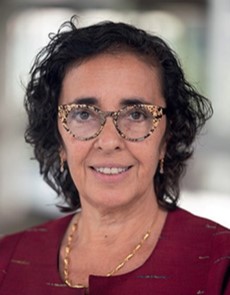 We were thrilled to welcome our keynote speaker, Dévora Kestel, Director of Mental Health and Substance Use, World Health Organization! Dévora Kestel has more than thirty years of international experience in Europe, the Caribbean and Latin America, implementing and advising governments on national policies related to mental health systems. She is a strong advocate for the rights of people with mental health issues. Since joining WHO in 2000, Dévora Kestel has worked at country, subregional and regional levels, in WHO and PAHO. In 2015, she became the Mental Health and Substance Use Unit Chief at PAHO. The different positions she occupied and challenges she faced, give her a privileged perspective to now undertake global responsibilities. Dévora is a great friend of Clubhouse International and supporter of the Clubhouse approach to recovery.