

Our Board of Advisors
Looking to expand Clubhouse rehabilitation programs more broadly across more countries and communities, Clubhouse International recently formed a new Board of Advisors. We are pleased to announced that five respected experts in their fields have joined this new board, which will provide advice and support for our global mission.

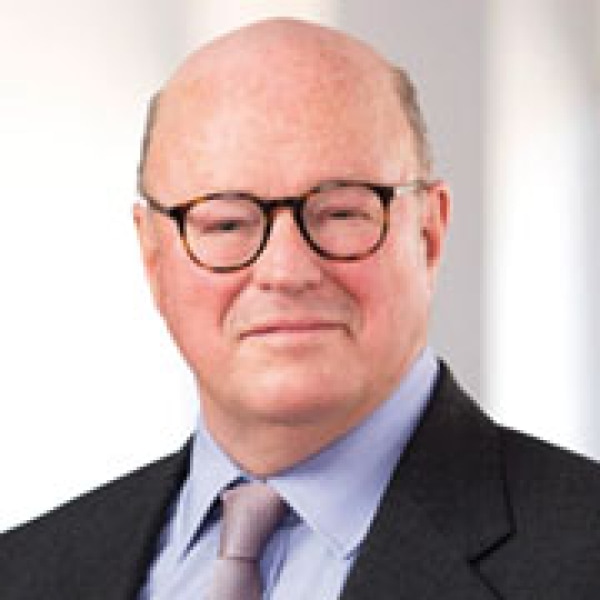
In Memoriam: Ambassador Frank G. Wisner
Job Position:

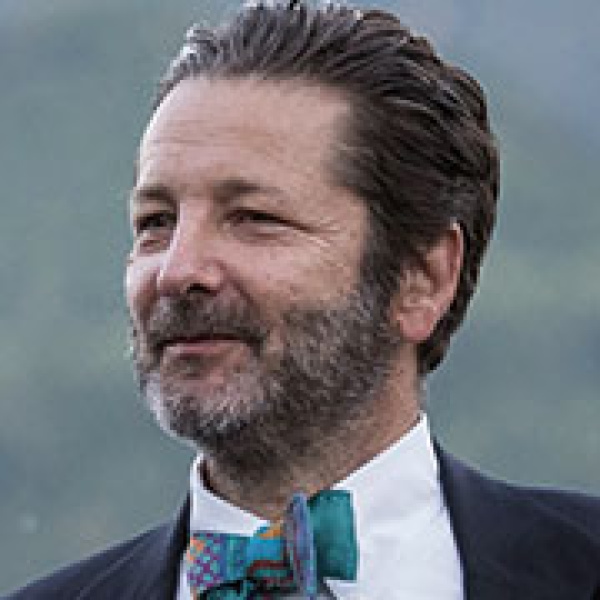
Philip Goelet
Philip Goelet is a scientist, entrepreneur and investor. After completing his PhD in 1982 at the Laboratory of Molecular Biology in Cambridge UK, he worked as a post-doctoral student on learning and memory at Columbia University, NY. In his career, he has co-authored more than 40 publications in the fields of molecular biology, neuroscience and genomics.
Goelet co-founded a number of biotechnology companies including Molecular Tool, Inc., RiboTargets, Plc., Dihedron, Inc., Population Genetic Technologies, Ltd., Arginetix, Inc., ZuvaChem, LLC and AgriMetis, LLC. The majority of these companies were co-founded by Acidophil, an innovation
company he co-founded with research scientist Sydney Brenner in 2000.
Goelet has invested in a number of venture capital firms through Red Abbey, LLC, since 1997 with his brother Christopher Goelet. In 2003, Red Abbey Venture Partners, a life sciences private equity fund, was co-founded by Goelet, Frank Bonsal and Matt Zuga. Since 2009, Philip continues to invest primarily in the companies founded by Acidophil.
Dr. Goelet is a member of the Senior Advisory Group for The Johns Hopkins Medicine Alliance for Science and Technology Development.

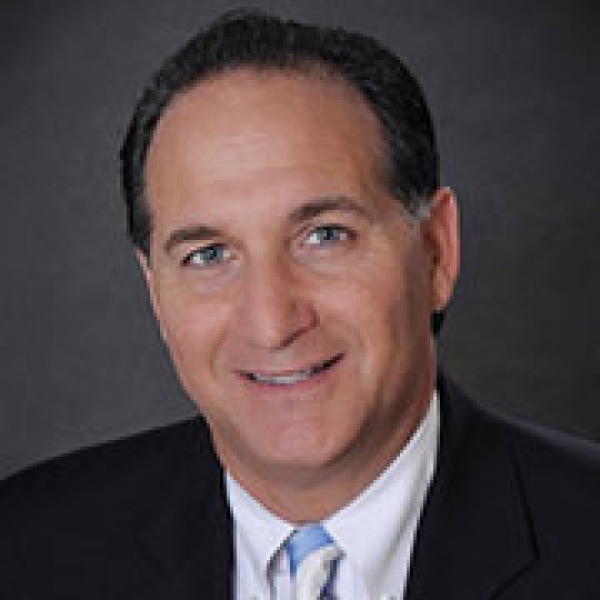
Steven Leifman
The Honorable Judge Steven Leifman is at the forefront of a public policy movement in the criminal justice system to reduce the number of people with mental illness in prison, and to develop alternative approaches that offer treatment and support for recovery. He serves as Associate Administrative Judge in the Miami-Dade County Court Criminal Division and Special Advisor on Criminal Justice and Mental Health for the Supreme Court of Florida. He is co-chair of the Council of State Governments/TAPA Center for Jail Diversion Judges’ Criminal Justice/ Mental Health Leadership Initiative, and member of the National Leadership Forum for Behavioral Health.
In 2000, Leifman created the nation’s first program to divert individuals with serious mental illness who do not pose a risk to the public away from the criminal justice system and into community-based treatment and support services. The Eleventh Judicial Circuit Mental Health Project has resulted in fewer arrests and incarcerations of people with mental illness, reduced crime, reduced injuries to law enforcement officers, improved public safety, reduced cost to the tax payers and improved administration of justice.
Since 2000, Leifman has also developed specialized training for law enforcement officers as well as fellow judges to improve their ability to handle cases involving people with mental illness. It was for his groundbreaking work helping people with mental illness in the criminal justice system that Leifman was awarded the William H. Rehnquist Award for Judicial Excellence from the National Center for State Courts in 2015. One of the nation’s highest judicial honors, the Rehnquist Award is presented annually to a state court judge who exemplifies judicial excellence. U.S. Supreme Court Chief Justice John G. Roberts Jr. presented Leifman with the award.
Judge Leifman continues to work on behalf of the mentally ill defendants he sees in his courtroom, with his most recent project being a state-of-the-art Mental Health Diversion facility that will include short-term housing, a crisis unit, rehabilitation areas, and a courtroom slated to open in 2020.

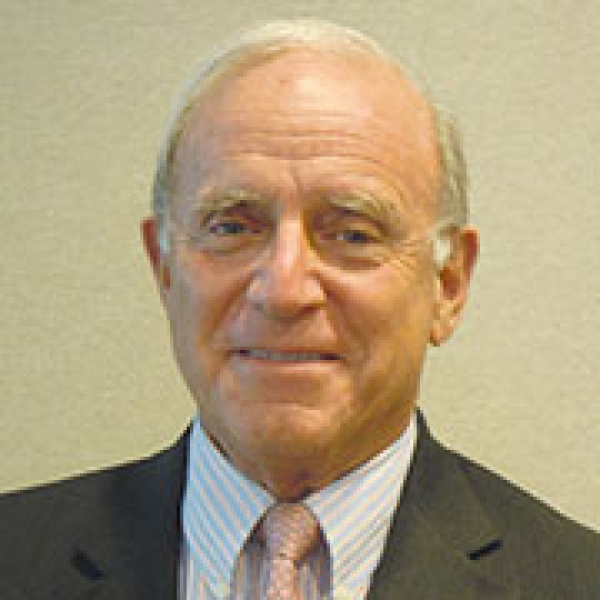
Whitney D. Pidot
Mr. Pidot is a graduate of Harvard College and Columbia Law and Business Schools. He was a corporate and finance lawyer for 35 years at the international law firm of Shearman & Sterling, where he served as Global Managing Partner of the Firm. After his retirement, he became the Chairman of Goelet, LLC. In addition to working with financial institutions and public companies, he represented family clients and their business interests. He has served on boards of public and private corporations in the manufacturing, banking, investment, oil & gas and biotech industries. He also served as vice-chairman of a hospital and as officer or board member of various other not-for-profits, formerly served as mayor of his town in Locust Valley New York, and currently serves as mayor of the Town of Jupiter Island Florida.

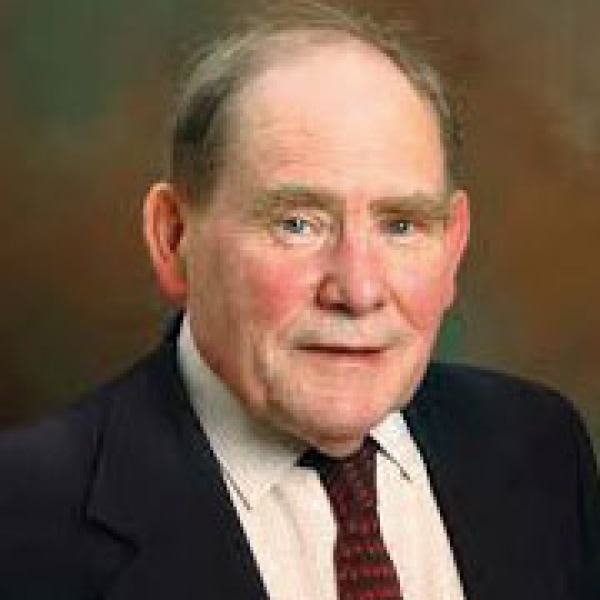
In Memoriam: Sydney Brenner
It is with great sadness thata we announce the passing of Dr. Brenner on April 5, 2019. He will be greatly missed by the Clubhouse Community, his friends and his family.
Of European descent and born in South Africa, Brenner began his university studies at the age of 15 and went on to become a Nobel Laureate, conducting research that has been critical to developing our understanding of the molecular biology of the human brain.
Brenner earned degrees in medicine and science in 1947 from Johannesburg’s University of Witwatersrand and then a doctorate in chemistry from Oxford University in 1954. There, he began taking part in leading-edge research into DNA, molecular biology and developmental genetics. In the early 1960s, Brenner co-discovered the existence of messenger RNA, work that led to his first Lasker Award in Basic Medical Research; he later received a second Lasker Award in honor of his outstanding lifetime achievements.
It was Brenner’s pioneering research begun in 1965 that led to his Nobel Prize. He laid the groundwork to make C. elegans, a small, transparent nematode, into a major model organism for genetics, neurobiology and developmental biology research. Beyond his own research, Brenner has been a driving force in advancing scientific research worldwide. He was instrumental in guiding Singapore toward biomedical research and founded the Molecular Sciences Institute in Berkeley, California, in 1996, serving as its president and director of science. He is also founding president of the Okinawa Institute of Science and Technology. Brenner, who previously had served as a scholar-in-residence at The Scripps Research Institute, and joined the Salk Institute faculty in 2000. He was awarded the Nobel Prize in Physiology of Medicine in 2002.
In Memoriam: Ambassador Frank G. Wisner
Ambassador Wisner’s diplomatic career spans four decades and eight American presidents. He served as ambassador to Zambia, Egypt, the Philippines, and India during his extensive career in the State Department. In addition to his role as ambassador to four countries, he has served as Under Secretary of Defense for Policy and as Under Secretary of State for International Security Affairs. Ambassador Wisner was also senior Deputy Assistant Secretary for African Affairs from 1982 to 1986. As Director of the Office of Southern African Affairs, Frank Wisner worked closely with Secretary of State Henry Kissinger to launch negotiations with Zimbabwe and Namibia. Secretary of State Condoleezza Rice appointed Ambassador Wisner as the nation’s special representative to the Kosovo Status Talks in 2005 where he played a crucial role in negotiating Kosovo’s independence.
Currently serving as a Foreign Affairs Advisor at the law firm of Patton Boggs, LLP, Ambassador Wisner is a graduate of Princeton University. He serves on the board of directors of EOG Resources and the Business Council on International Understanding, as Trustee Emeritus of the American University of Beirut, and as Advisory Trustee of American University in Cairo.


See the Model in Action
Clubhouses are a powerful demonstration that people with mental illness can and do lead productive, fulfilling lives.