

Step One: Form a Start-Up Group
Form a group of people interested in starting a Clubhouse from various sectors: people with mental illness, family members, non-profit professional community leaders, mental health professionals, etc.

Forgot password? Enter your email above and click here.
To start a new Clubhouse Membership or re-activate a former Clubhouse Membership, click below:

Clubhouse International is Currently Working with over 50 Clubhouse Startup Groups
Starting a new Clubhouse in your community begins with a group of interested people coming together and sharing a common vision. Clubhouse International leads new groups through the steps to making the dream a reality, in our New Clubhouse Development training and ongoing mentoring programs. To learn more about out how to start a Clubhouse in your community, contact Clubhouse International COO Jack Yatsko at jyatsko@clubhouse-intl.org or 808-651-8598.
Quick Links:
Form a group of people interested in starting a Clubhouse from various sectors: people with mental illness, family members, non-profit professional community leaders, mental health professionals, etc.


By Magnus Wallman, Director
"Today, we have a working and growing Clubhouse that provides hope, friendship and purpose for our members. Our dream had become a reality."
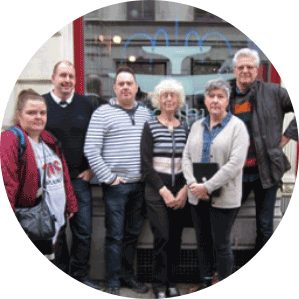
If you'd like to find out how to start a Clubhouse in your community, please contact Jack Yatsko, Chief Operating Officer, at jyatsko@clubhouse-intl.org or 808-651-8598, or read more below.
The guaranteed rights of membership in a Clubhouse are: a right to a place to come, a right to meaningful work, a right to meaningful relationships, and a right to a place to return. Providing for these rights to members suggests most of the considerations of “how to”. It is important to remember that a Clubhouse is first and foremost a community of people. It is a community before it is a building or a program. A Clubhouse is a community organized to help people living with serious mental illness as they manage their illness and rejoin the worlds of employment, education, family, and friends. People who come to a Clubhouse are called members; they are men and women of all ages who work within the Clubhouse to promote and achieve their recovery from schizophrenia, bipolar disorder, major depression, or other serious and persistent forms of mental illness. Participation is entirely voluntary, with all Clubhouse services and opportunities provided by members and staff working side by side as colleagues. The International Standards for Clubhouse Programs further define the Clubhouse Model of rehabilitation. Starting to build this community involves people coming together and developing relationships through shared work. The work of a Clubhouse community always involves projects and tasks that are important to the people who participate. It is in this context that the start up work of a Clubhouse should begin.
Initially, when you decide to start a Clubhouse it is a good idea to form what we refer to as a Clubhouse “startup group”. The startup group consists of talented, energetic individuals who are both committed to and uniquely positioned to helping a Clubhouse get started. Typically a startup group consists of people who represent the following interests: people with mental illness, family members, mental health professionals, local politicians, community leaders, business people, and individuals who can be helpful accessing funding for the Clubhouse. The startup group is charged with initiating Clubhouse activity and providing community education, support for the new Clubhouse, funding for the Clubhouse and hiring the Director, working with her/him to locate a building for the Clubhouse and beginning to identify community employers for involvement in the Transitional Employment Program.
Establishing contact and developing a relationship with a Clubhouse International authorized Training Center can also help to keep the startup group pointed in the right direction.
Typically after these items are accomplished the startup group will either transition into the role of the Board of Directors or the Clubhouse Advisory Board. The group (now a board) from there forward provides oversight management, support and fundraising to the Clubhouse and delegates responsibility for day-to-day management of the Clubhouse.
When two or more people become excited about the idea of having a Clubhouse in their community they should immediately begin to meet on a regular basis with the sole purpose of starting a Clubhouse.
The initial participants should begin to identify other local people who would be appropriate for membership in the Clubhouse startup group. Once identified, the proposed individuals should be educated about the Clubhouse approach (reading the Clubhouse Standards is a good start) and if possible scheduled for a tour of a nearby Clubhouse International Accredited Clubhouse.
Concurrently, the startup group members should begin to educate themselves about possible sources of startup and ongoing funding for the Clubhouse. These sources might include: a local government, state/county provincial/city or national mental health agency, vocational rehabilitation agency and public health or social service agencies. Additionally, there are many public and private foundations that fund community mental health projects. Another alternative is to work with an existing mental health program and convert it into a Clubhouse. In order to receive funding from any of the above organizations the Clubhouse will have to either be incorporated as a not-for-profit/non-governmental organization or be part of an already existing not for profit/non-governmental organization. This may be the very first task of the startup group. (See Freestanding vs. Auspice Agency Clubhouse). In countries such as Australia, obtaining PBI or DGR status is important in order to be considered for grants and tax exemptions. It is important for the startup group in any region to educate themselves about potential funding sources and means to achieve them.
In many places there are government funds allocated on an annual basis for providing services to people with serious mental illness. Often there are also funds allocated for people with disabilities in general. The funds are usually set aside from general taxes. Almost always there is an established system in place that is used for determining how these funds are allocated for services to people in need. This system may be controlled by the local government in a way where funding decisions, (i.e. What services are necessary and who should be funded to provide them) are made by government employees. Funding decisions may also be determined by some sort of competitive bidding process used in their area. The best way to access these funds is to bring one or more people from government agencies and organizations that receive funds into the working group. Another potential funding source in the U.S. is through federally funded vocational rehabilitation agencies, which may be open to subcontracting out vocational services to Clubhouse model programs.
Although it is uncommon for foundations to provide perpetual funding for a Clubhouse it is not uncommon for them to provide start up funds or capital funds or one-time grants. The members of the startup group should seek the help of someone who knows the local and national foundation arena and should seek out foundations that have funded projects in your region or community mental health projects in general. Most large corporations have charitable foundations or offices. Many state, cities, and universities will have foundation or grant making libraries that are very good resources for available funds. The Internet is also a good resource in researching potential funding bases. (see Samples of Successful Grants)
Although this sounds like the easiest way to start a Clubhouse it is often the most difficult. In this scenario an existing program model that is funded to provide services to people with mental illness reorganizes into a Clubhouse community (e.g. a day treatment or partial hospitalization program). This approach comes about as the result of advocacy on the part of the startup group. It is usually only successful if the existing program is providing unsatisfactory services or is dissatisfied with its current model. The difficult part of this plan is that the people involved as employees or consumers of the existing program would have to adjust their roles from staff/client or therapist/patient to Clubhouse colleagues. The adjustment is often very difficult for staff to make. On the other hand, this is many times the most expedient way to gain Clubhouse funding. To bring about this kind of change the startup group will have to provide or arrange for education about the Clubhouse model for funders, staff and consumers of the existing program.
Again, visiting an area Accredited Clubhouse will provide a “hands-on” view of what a Clubhouse looks like. Networking with a Training Center Clubhouse will also be helpful, as many of them have worked with programs that have made a successful transition from a traditional day treatment program into a Clubhouse. They can also refer startup group members to people who have gone through this experience previously.
Note: Ideally a fully functioning Clubhouse program serving an active membership of 100 – 125 with an average daily attendance of 60 – 70 people would need $500,000 (U.S.) annually. In the first year or two of startup, the Clubhouse would not need this much money for operating expenses but significant funds are necessary for equipment and capital expenses. The Clubhouse operating budget should grow with the active membership. As an example, you don’t need six staff for an active membership of 15 but you do for 70.
The Clubhouse startup group will have to organize the education of the local community as to what a Clubhouse is all about. The primary education focus is on the mental health community but also important are politicians, philanthropists, and business groups such as Rotary Clubs or Chambers of Commerce, and community organizations such as the Alliance for the Mentally Ill. Some ideas about accomplishing this are listed below.
One of the most helpful things the startup group (and later the Board) can do for a Clubhouse is to assist in developing Transitional Employment (TE) placements (see How Clubhouses Work). TE is a cornerstone of Clubhouse International Clubhouses. It is also one of the most difficult components to operationalize. It has been our experience that Clubhouses that develop TE sooner experience more success than those that wait or struggle for years to develop TE placements for members. Helping members return to paid employment at the employer’s place of business is a primary function of the Clubhouse as a service to members but is also a very high profile success for the Clubhouse. Success breeds success. If a Clubhouse can start members working on Transitional Employment the day that the Clubhouse doors are opened it goes a long way towards promoting the Clubhouse with potential new members, funders and others in the community. Successful employment programs are also often a magnet for additional funding from government and private organizations.
It is very important for the members of the startup group to educate themselves about the Transitional Employment Program and to help line up a few quality employers to provide TE opportunities at the beginning of Clubhouse operations.
A brief description of a Clubhouse/Transitional Employment relationship is as follows:
Some classic mistakes in establishing a Transitional Employment program include:
Hiring the first Director for the Clubhouse may be the most important single task for the startup group. Although the Clubhouse is a community based on a flattened hierarchy and mutual relationships, the Director is the leader in this community. Hiring the right person can mean the difference between success and failure.
The Director must be a person with both a high level of understanding and a commitment to Clubhouse values and principles. She/he should also have the capacity to work long hours, represent the Clubhouse publicly, teach the model and manage the day-to-day operations of the complicated community service program.
The person hired to be the Director ideally would already have Clubhouse experience and have participated in comprehensive Clubhouse training at a Clubhouse International authorized Training Center.
Historically we have learned that training is one of the most effective ways to ensure the success of the Clubhouse. Establishing a Clubhouse is only effective if the process is supported by the entire Clubhouse. Therefore it is necessary for the Director, key staff and members to have been through training and to fully understand and embrace the Clubhouse model.
If the Director is not committed to the model it simply will not happen. A Clubhouse is still a radically different approach than every other program of psychiatric rehabilitation. It is also a very difficult model to implement and maintain. If there is not dedicated leadership it is very easy to get distracted from the model and the Clubhouse will quickly take the form of other traditional mental health programs or be totally weakened by compromises.
A Director has to be able to participate in the professional mental health arena, the political arena, the fundraising arena, and the business/employer arena and also be a hands-on generalist in the day-to-day work of the Clubhouse. The Director has to be a high-energy person with enough charisma to lead, teach, problem solve, have fun and deal with crisis situations.
When looking for the Clubhouse Director the start-up group has several resources. Clubhouse International offers free advertising to new Clubhouses on their web page. There are also many organized Clubhouse Coalitions internationally. They are always willing to spread the news about a Clubhouse Director position that is available. Clubhouse International Training Centers are also a very good place to advertise for a director as they come into contact with a lot of Clubhouses and can recommend your position to people they know are looking for a Director position and have the skills and experience necessary.
Some classic mistakes when hiring a Director include the following;
It is possible to hire a good Director from outside the Clubhouse community, and it may be your only choice because of your location, sponsoring agency or finances. In this case, it is important that you take your time and make sure the person has all of the skills, values and dedication necessary.
The startup group should look to other strong Clubhouses or Clubhouse International to get copies of Director job descriptions, help in hiring, and support after the Director has been hired.
Once a Director has been hired, she/he will have to introduce themselves to the mental health community that will be making referrals to the Clubhouse or those people who are themselves potential members of the Clubhouse. Initially the director would work as part of the startup group. The startup group should arrange introductions, meetings and maybe even a reception for the new Director and include all of the family groups, consumer groups, mental health organizations, government officials, funders and potential TE employers. The initial days at the Clubhouse should be focused on what the group identifies as its most important needs. For example, if getting to and from the Clubhouse is difficult, transportation is an area to focus on as a need. Similarly, we get hungry during the day so preparing a meal and an operation to serve a group of people becomes an area to focus on. The important point is that Clubhouses need to grow through a process of deciding what is important to their particular community.
A common mistake occurs when a new Clubhouse visits a nearby Clubhouse and sees 3-4 work units in operation and feels like they then need to develop the same amount of units immediately. This over-structuring spreads people out too quickly without a particular focus, equipment in place, or enough staff and members to have enough meaningful work in the day. Ideally there should be at least two staff in each unit.
At the core of the Clubhouse experience is the Work-Ordered Day, an eight-hour period Monday through Friday during which the business of the Clubhouse is accomplished. The work ordered day intentionally parallels the typical business hours of the general community. Members and staff work together in an open and collegial environment. Examples of the work that may be completed include; preparing a daily lunch, answering phones, writing a newsletter, operating an employment placement, providing community support services, and participating in advocacy efforts on behalf of the Clubhouse and people with mental illness in general and whatever other projects are seen as important to the life of the Clubhouse.
In the first few days it is important to create an atmosphere with a sense of belonging and trust. Greeting members each day, calling those that may have initially come but not returned, or potential members, and talking openly about the direction of the Clubhouse with all those involved helps to foster a sense of caring and responsibility for those involved.
If the budget has been established, hiring key staff members becomes a priority. Members should be included in this process in screening resumes, participating on interview panels, providing tours for applicants, and spending time with potential in the work units if possible. This builds a sense of ownership right from the beginning days and shows the members that their opinion counts. If the Director and 1-2 board members are the only individuals involved in the hiring process, not only does this create an unneeded hierarchy, it prevents members from taking on leadership roles. It also has a potential effect of resentment if the staff members do not work out and the Director was the only one doing the hiring. If members are included and the new staff doesn’t work out, then there is a sense of shared responsibility and the group owns it, not an individual. This is an important example of building relationships in the Clubhouse.
The Director and new members can also do the beginning work of buying furniture and equipment, naming the Clubhouse, and organizing the space.
Once a Director has been hired, she/he will have to introduce themselves to the mental health community that will be making referrals to the Clubhouse or those people who are themselves potential members of the Clubhouse. Initially the director would work as part of the startup group. The startup group should arrange introductions, meetings and maybe even a reception for the new Director and include all of the family groups, consumer groups, mental health organizations, government officials, funders and potential TE employers. The initial days at the Clubhouse should be focused on what the group identifies as its most important needs. For example, if getting to and from the Clubhouse is difficult, transportation is an area to focus on as a need. Similarly, we get hungry during the day so preparing a meal and an operation to serve a group of people becomes an area to focus on. The important point is that Clubhouses need to grow through a process of deciding what is important to their particular community.
A common mistake occurs when a new Clubhouse visits a nearby Clubhouse and sees 3-4 work units in operation and feels like they then need to develop the same amount of units immediately. This over-structuring spreads people out too quickly without a particular focus, equipment in place, or enough staff and members to have enough meaningful work in the day. Ideally there should be at least two staff in each unit.
At the core of the Clubhouse experience is the Work-Ordered Day, an eight-hour period Monday through Friday during which the business of the Clubhouse is accomplished. The work ordered day intentionally parallels the typical business hours of the general community. Members and staff work together in an open and collegial environment. Examples of the work that may be completed include; preparing a daily lunch, answering phones, writing a newsletter, operating an employment placement, providing community support services, and participating in advocacy efforts on behalf of the Clubhouse and people with mental illness in general and whatever other projects are seen as important to the life of the Clubhouse.
In the first few days it is important to create an atmosphere with a sense of belonging and trust. Greeting members each day, calling those that may have initially come but not returned, or potential members, and talking openly about the direction of the Clubhouse with all those involved helps to foster a sense of caring and responsibility for those involved.
If the budget has been established, hiring key staff members becomes a priority. Members should be included in this process in screening resumes, participating on interview panels, providing tours for applicants, and spending time with potential in the work units if possible. This builds a sense of ownership right from the beginning days and shows the members that their opinion counts. If the Director and 1-2 board members are the only individuals involved in the hiring process, not only does this create an unneeded hierarchy, it prevents members from taking on leadership roles. It also has a potential effect of resentment if the staff members do not work out and the Director was the only one doing the hiring. If members are included and the new staff doesn’t work out, then there is a sense of shared responsibility and the group owns it, not an individual. This is an important example of building relationships in the Clubhouse.
The Director and new members can also do the beginning work of buying furniture and equipment, naming the Clubhouse, and organizing the space.
After the Clubhouse starts to operate, the startup group or Board role shifts to other important areas such as, long range planning, fundraising, public relations, advocacy, and finding other Board members to help with employment development. Clubhouse members should also be on the Board and their role is primarily educational. This also reduces the responsibility of the Clubhouse Director in this area and provides a “reality check” to Board members.
We hope that this information is helpful to you in starting a Clubhouse in your area. In doing so, you are joining a fast growing federation of Clubhouse communities from cities and towns around the world. We currently average 20 new Clubhouses each year. We strongly encourage embarking on this exciting venture with the support of a Clubhouse International authorized Training Center. Clubhouse International is available to provide technical assistance to you as well and we can be reached at (212) 582-0343. Our Website is https://clubhouse-intl.org. Finally, as you begin to have in-depth conversations about the Clubhouse Standards and starting a Clubhouse, we encourage you to purchase the TEACH Manual. This manual provides a commentary to each of the Standards and can assist you in developing a dialogue among the key players in your community about the Clubhouse Model of rehabilitation. TEACH is available from Grand Avenue Club for $30.00 and their address is: 210 East Michigan Avenue, Milwaukee, Wisconsin 53202.